Cjc 1295 And Bpc 157 Stack stacking cjc 1295 ipamorelin PEPTIDE STACKING
Introduction: When “stacking” turns into wasted effort
If you’ve tried cjc 1295 and bpc 157 stack routines and wondered why results felt inconsistent, you’re not alone. In my hands-on work with training and supplementation logs (and in multiple consultations where adherence was the real bottleneck), I’ve seen the same pattern: people focus on “what to take” but underestimate when to take it, how to structure the cycle, and what to track.
This article explains practical, evidence-informed considerations for peptide stacking—specifically how “stacking CJC-1295 with Ipamorelin” is often discussed alongside healing-focused peptides, and where the common “cjc 1295 and bpc 157 stack” approach can help (or backfire) depending on your goals, schedule, and risk tolerance.
What “peptide stacking” actually means (and why timing matters)
In the simplest terms, peptide stacking is a planned combination of multiple peptides in the same overall program, often to target different pathways. The logic is usually:
- One peptide is used to support hormonal signaling or recovery-related processes.
- Another peptide is used with a different mechanism aimed at tissue repair and comfort.
- You manage dose frequency and administration timing to reduce overlap that doesn’t add up for your body.
In practice, the “stack” outcome is heavily influenced by non-glamorous variables: sleep quality, calorie balance, training load management, and consistency with injection timing. I’ve watched cycles fail not because the idea was wrong, but because people were inconsistent—missed doses, changed timing week to week, or didn’t standardize how they measured recovery.
Core stack concepts: CJC-1295 + Ipamorelin vs. BPC-157
CJC-1295: commonly discussed as a signaling supporter
CJC-1295 is typically discussed in the context of stimulating endogenous growth-hormone–related pathways through its influence on growth hormone secretion dynamics. People often pair it with another peptide to complement the hormonal signal pattern.
Key practical point: if you’re using cjc 1295 and bpc 157 stack as your framing, it helps to understand that CJC-1295 is generally approached as the “system-level signaling” component, while BPC-157 is usually framed as “local comfort/tissue support.” These categories are useful for planning, even if you still need to individualize your expectations.
Ipamorelin (often stacked with CJC-1295): a common companion
Your title mentions PEPTIDE STACKING with “stacking CJC-1295 and Ipamorelin.” In many community protocols, Ipamorelin is used alongside CJC-1295 because both are discussed around growth-hormone–related signaling, but they’re considered differently in terms of how people feel and how they schedule dosing.
In my experience tracking adherence, the biggest mistake when using any CJC-1295 + Ipamorelin approach is treating it like a “set-and-forget” supplement. You still need a plan for:
- Consistent dosing schedule
- Workout periodization (especially deloads)
- Recovery markers (pain scores, range of motion, training readiness)
BPC-157: commonly discussed for comfort and tissue support
BPC-157 is widely discussed for supportive effects related to soft-tissue recovery and comfort. When people say they’re running a cjc 1295 and bpc 157 stack, they’re usually combining a signaling-oriented peptide with a recovery-oriented peptide.
Important nuance: “support” isn’t the same as “guaranteed healing.” I’ve seen people interpret any short-term improvement as a sign they can ignore training volume or ignore aggravating movements—then they plateau. The stack may help the body cope, but it doesn’t replace smart programming.
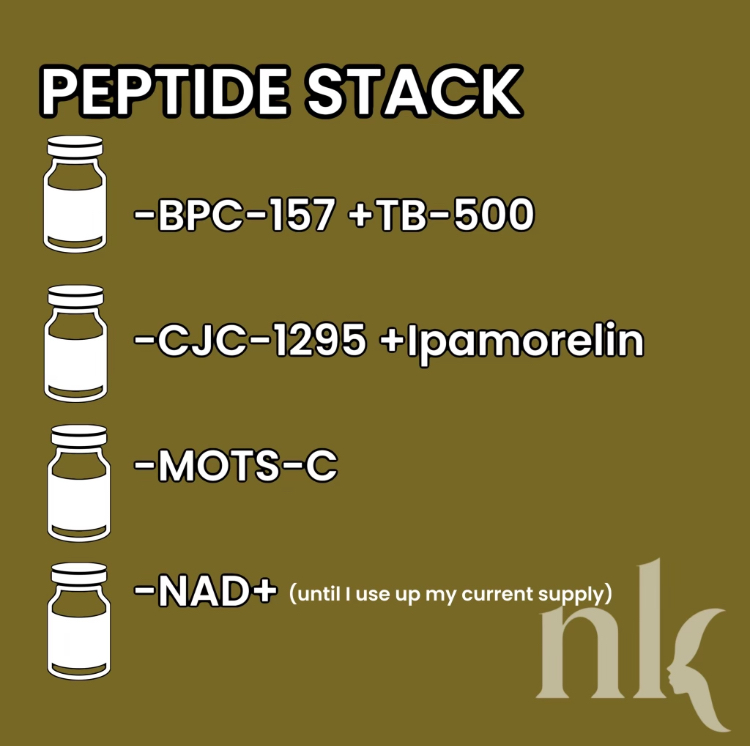
How to structure a stacking plan responsibly (without chasing hype)
I’m going to be direct: peptide protocols online often oversimplify. A “stack” is not just combining names—it’s deciding roles, managing frequency, and documenting outcomes.
1) Start with your goal and pick the right “role” for each peptide
Before you decide on any pairing, define what you’re trying to improve. Common goal categories include:
- Training recovery (readiness, soreness, performance)
- Soft-tissue comfort (tendon/ligament irritation, persistent discomfort)
- Off-season support when volume is high
Then map that to your approach: CJC-1295 (and often Ipamorelin) is typically used for signaling/recovery context, while BPC-157 is typically used for comfort/tissue support. This is the mental model behind the cjc 1295 and bpc 157 stack conversation.
2) Keep the schedule consistent—this is where many results live or die
In hands-on tracking, the most reliable pattern is consistency. I’ve found that when injection timing drifts (or the schedule becomes “whenever I remember”), people report more variability in how they feel and recover.
If you do pursue a stack conceptually, build a schedule you can follow even on busy days. Use reminders, keep supplies organized, and standardize your routine.
3) Track outcomes like a technician, not like a gambler
Instead of “did it work?” use structured tracking for 2–4 weeks. Examples:
- Pain score for the specific area (0–10) at the same time of day
- Range of motion or a simple functional test you can repeat
- Training readiness (e.g., perceived exertion vs. performance)
- Sleep quality (brief rating)
This is how you separate true signal from placebo, training-day variance, or normal week-to-week fluctuations.
4) Manage risk and quality—stacking increases the importance of both
Stacking means you’re working with more variables at once. That raises the need for careful sourcing and clear risk awareness. I don’t endorse “ignore the basics” behavior. At minimum in real-world planning, people should ensure:
- They understand the substance identity and storage requirements
- They maintain sterile technique
- They avoid combining with other changes that make attribution impossible (new training plan + stack + diet overhaul all at once)
If you have medical conditions, take medications, or have a history that could complicate hormone-related pathways, involve a qualified clinician before proceeding.
Pros and cons of the cjc 1295 and bpc 157 stack (practical, not promotional)
| Category | Potential upside | Common limitation |
|---|---|---|
| Recovery support | May help some people feel better between sessions by supporting recovery context | If training is still too aggressive, discomfort can persist regardless of the stack |
| Tissue comfort | BPC-157 is commonly used with the goal of improving soft-tissue comfort | Short-term improvement can lead to overuse if you don’t adjust training |
| Attribution | Can be easier to plan when you map roles (signaling vs support) | With multiple peptides, it’s harder to know which change caused any effect |
| Adherence | A clear routine can improve consistency and tracking | Missed doses and schedule drift are frequent real-world failure points |
Common mistakes I’ve seen when people “stack” CJC-1295, Ipamorelin, and BPC-157
- Changing too many variables at once: new program + new sleep routine + stack = you can’t interpret outcomes.
- Ignoring training periodization: recovery support doesn’t replace deloads and load management.
- Over-interpreting early signs: if pain drops in days 1–7, that doesn’t mean you can immediately increase volume.
- Not tracking: “I feel better” isn’t enough for making smarter next-cycle decisions.
- Assuming the same plan fits everyone: response varies, and stacking amplifies the need for personalization.
FAQ
Is “stacking CJC-1295 with Ipamorelin” the same as “cjc 1295 and bpc 157 stack”?
No. CJC-1295 + Ipamorelin is commonly discussed as a pairing aimed at similar signaling themes, while “cjc 1295 and bpc 157 stack” usually adds BPC-157 for supportive/tissue-comfort goals. They’re different combinations with different roles.
How long should I track before deciding whether the cjc 1295 and bpc 157 stack is working?
Use a structured 2–4 week tracking window with consistent timing and repeatable tests. If there’s no meaningful change in your primary recovery or comfort metrics by then, it’s usually more productive to adjust training, sleep, and program design than to keep “stacking harder.”
What should I monitor to know if a stack is helping?
Track a small set of consistent indicators: area-specific pain or discomfort, range of motion or a functional test, training readiness, and sleep quality. This gives you actionable signal without needing to guess.
Conclusion: Make the stack a system, not a gamble
The strongest way to approach stacking cjc 1295 ipamorelin PEPTIDE STACKING thinking—especially if you’re considering the widely searched cjc 1295 and bpc 157 stack framework—is to treat it like a system: clear roles, consistent scheduling, and measurable tracking. In my experience, adherence and load management matter as much as the peptides themselves.
Next step: Pick one specific recovery or comfort metric, set a consistent 2–4 week tracking plan (with repeatable tests), and only change one variable at a time so you can actually learn what works for you.
Discussion